
Top 5 Causes of Slip and Fall Accidents on Bathroom Tiles (And How to Fix Them Permanently)
By TechNanoIndia · November 16, 2026 · 18 views
The Hidden Hazard in Modern Bathrooms
Every day, millions of people step onto wet bathroom tiles, polished ceramic shower stalls, and smooth vitrified floors without giving safety a second thought. Yet, healthcare and safety statistics worldwide reveal a disturbing truth: bathrooms are responsible for over 70% of home slip-and-fall accidents.
From young children bursting out of the bath to elderly family members navigating slippery surfaces, or hotel guests stepping onto glazed wet tiles, a sudden loss of traction can lead to severe injuries—ranging from fractures and tailbone bruises to emergency head trauma.
Modern interior trends heavily feature smooth, high-gloss vitrified tiles, polished marble, and glazed ceramics because they look elegant and luxurious. However, when water, soap lather, or shampoo residue coat these surfaces, friction drops to dangerously low levels.
In this guide, we break down the Top 5 causes of slip and fall accidents on bathroom tiles and show you how advanced nanotechnology treatments like TENI-GRIP Ultra permanently solve these hazards—keeping your floors mirror-glossy yet completely slip-resistant when wet.
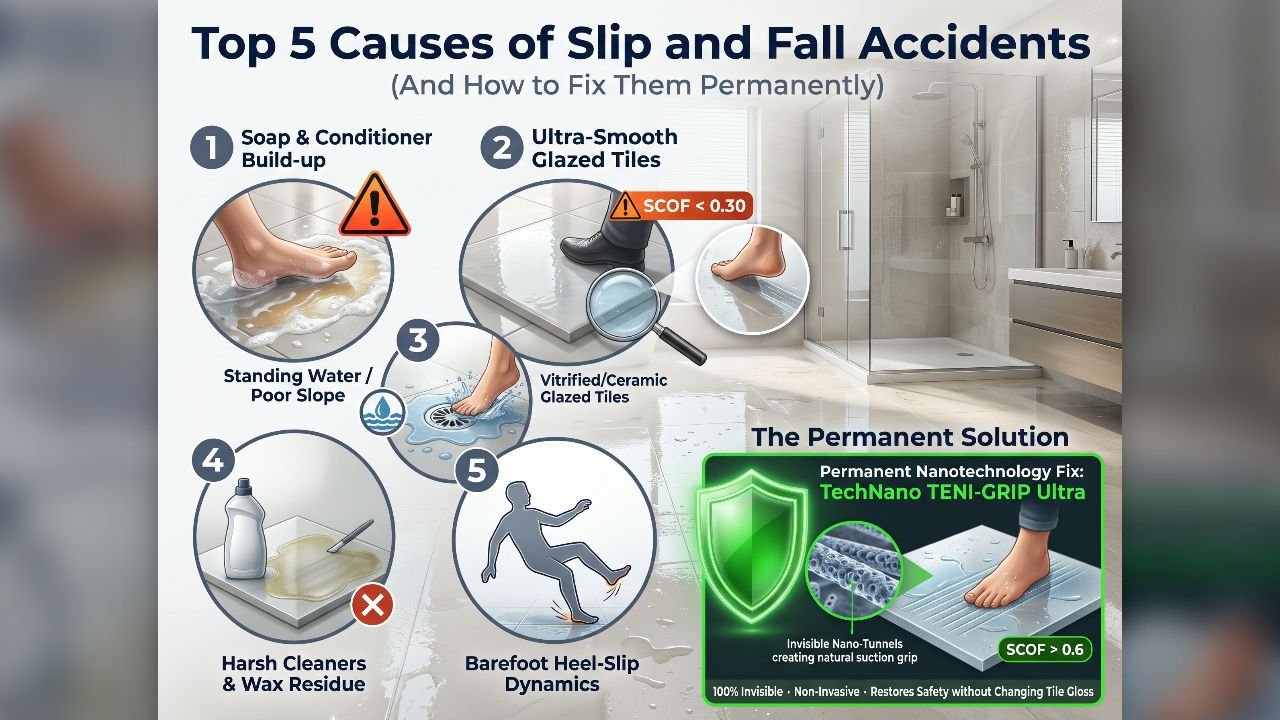
1. Soap Scum, Shampoo Residue & Hair Conditioner Build-up
One of the most frequent yet overlooked causes of bathroom falls is the invisible accumulation of soap residue.
- The Hazard: Synthetic body washes, shampoo bar lathers, and hair conditioners contain fatty acids, oils, and polymers. When mixed with hard tap water minerals (calcium and magnesium), they form a tough, microscopic film known as soap scum.
- Why It’s Dangerous: Soap scum fills in the natural microscopic pores of your tile surface, creating an ultra-slick barrier. The moment water hits this layer, it acts like oil on glass.
- The Solution: Ordinary mops and scented floor cleaners merely smear this film around. Using a specialized surface preparator like TechNano Prewash Anti-Slip Surface Preparator strips away deep-seated organic soap scum and grease, restoring baseline surface friction.
2. Ultra-Smooth Glazed Ceramic & Vitrified Tile Finishes
High-gloss glazed ceramic tiles and polished vitrified tiles (PGVT) dominate contemporary Indian and international homes.
- The Hazard: Smooth glazed tiles have a naturally low Static Coefficient of Friction (SCOF). Under dry conditions, they feel fine. But when wet, their SCOF drops dramatically below 0.30—far below the 0.50 to 0.60 SCOF safety benchmark recommended by national floor safety standards (such as NFSI B101.1).
- The Problem with Traditional Non-Slip Solutions: Standard fixes—like rubber bath mats, abrasive anti-skid tapes, or rough non-slip coatings—collect dirt, harbor bacteria, turn yellow, and destroy the aesthetic beauty of your expensive bathroom tiles.
- The Nanotechnology Fix: Chemical anti-slip treatments like TENI-GRIP Ultra C (engineered for ceramic) and TENI-GRIP Ultra P (engineered for vitrified & porcelain tiles) create microscopic, invisible nano-tunnels within the tile surface. These nano-tunnels instantly break water surface tension underfoot—creating a natural suction grip without altering your tile gloss, color, or texture.
3. Standing Water & Inadequate Floor Slope Drainage
Poor architectural slope construction or sluggish floor drains lead to standing water around shower cubicles, bathtubs, and vanity basins.
- The Hazard: When water fails to drain away rapidly, a continuous layer of standing water accumulates between the tile and barefoot soles or slipper rubber.
- Hydroplaning Effect: Just like a car hydroplanes on a flooded highway at high speed, your foot hydroplanes on a smooth wet tile at normal walking speed.
- The Solution: While proper drain clearing and slope maintenance are essential, treating water-prone zones with TENI Hydro Shield or TENI-GRIP Ultra ensures that even under standing water, bare feet and slippers maintain high tactile grip.
4. Harsh Surfactant Cleaners & Wax Polish Residues
Ironically, many cleaning routines designed to keep bathrooms sparkling clean actually make tiles much more slippery.
- The Hazard: Multi-purpose liquid detergents and cheap floor polishes contain chemical surfactants and wax polymers. When allowed to dry, they leave behind an invisible oily film.
- The Mistake: Bleach or acid-heavy cleaners can also strip protective tile glazes unevenly without creating true friction, leaving the tile rough in some spots and slick in others.
- The Solution: Switch to pH-neutral floor cleaners. If your tiles have been previously coated with wax or acrylic polishes, strip them before applying a certified permanent anti-slip treatment.
5. Barefoot Suction & Sudden Heel-Slip Dynamics
Bathrooms are unique because occupants are almost always barefoot, wearing wet rubber flip-flops, or stepping out of showers with wet skin.
- The Physics of a Fall: The most dangerous bathroom fall is the rearward heel slip. When a wet heel makes initial contact with a slick tile at an angle, friction vanishes instantly. The foot shoots forward, causing the person to fall backward onto the hard tile floor or bathtub rim.
- Who Is Most At Risk?
- Seniors & Elderly: Slower recovery reflexes turn minor slips into major hip fractures.
- Toddlers & Children: Active movement in wet bath areas leads to frequent falls.
- Hotels & Commercial Resorts: A single guest slip incident can result in costly legal liabilities and damaged reputation.
Quick Comparison: Traditional Fixes vs. Nanotechnology Anti-Slip Treatment
| Feature | Rubber Bath Mats | Abrasive Acid / Etching | TechNano TENI-GRIP Ultra |
|---|---|---|---|
| Tile Appearance | Covers & hides tile beauty | Dulls and destroys gloss | Minimal change (Invisible) |
| Hygiene | Collects mold, fungus, & dirt | Hard to clean | Hygienic & easy to clean |
| Durability | 3 - 6 months | Temporary / Damages tile | Long-lasting nano-pores |
| Wet Traction | Only where mat is placed | Uneven traction | Full floor coverage (SCOF 0.5 - 0.6+) |
Take Action Today: Make Your Bathroom 100% Slip-Proof
You don't need to replace your beautiful tiles or cover your floors with ugly rubber mats to ensure safety.
At TechNanoIndia, we bring engineered nanotechnology floor treatments directly to your doorstep:
- DIY Self-Application Kits: Simple 250ml (covers 30 sq.ft) and 1L combo packs complete with step-by-step guides for homeowners.
- Surface-Specific Formulations:
- TENI-GRIP Ultra C: For Ceramic Tiles
- TENI-GRIP Ultra P: For Vitrified, Porcelain, and Granite
- On-Site SCOF Testing & Commercial Assessments: For hotels, hospitals, offices, and residential complexes requiring documented safety compliance.
👉 Ready to stop bathroom slips? Fill out our Anti-Slip Assessment Form or Contact our floor safety experts today!